
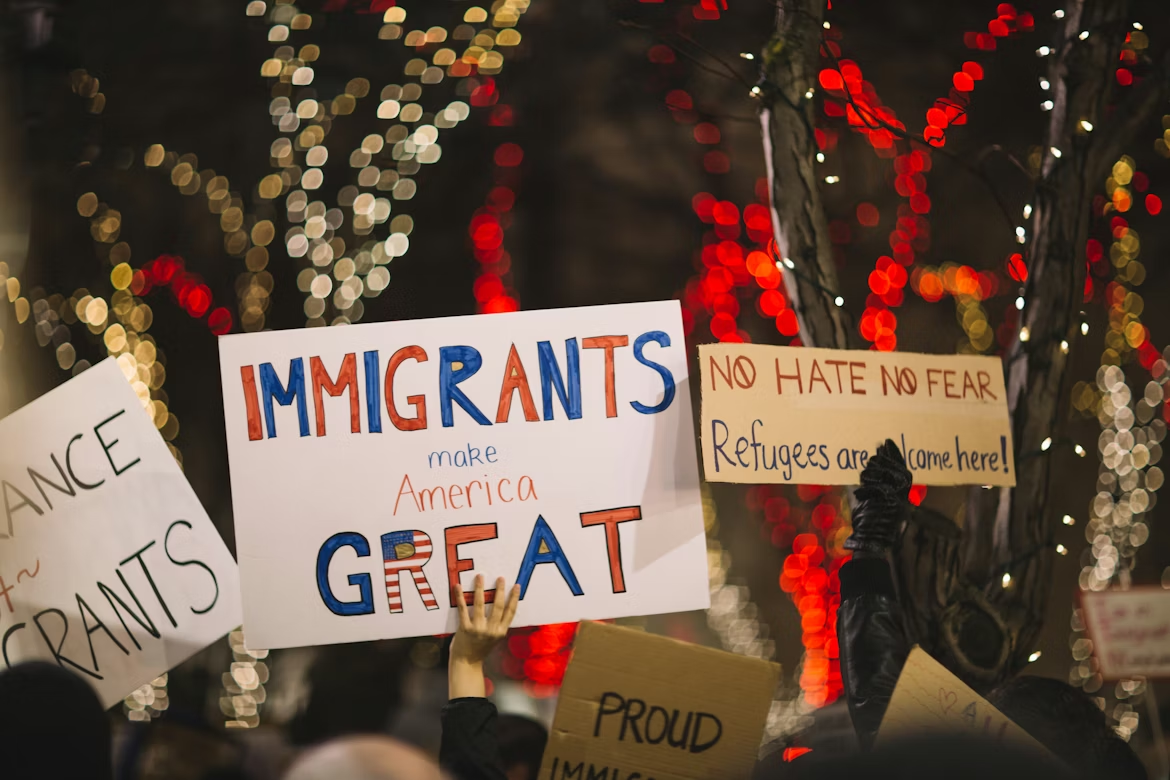
Photo by Nitish Meena
After many years of seeing my family struggle more than the average American, pushing their bodies even while aging only to get little pay, I recently learned about a Supreme Court Case involving a group of Hispanic kids who weren’t afraid and fought for what they believed was right.
In 1975, the state of Texas started a new policy for all school districts to make students who are not “legally admitted” pay tuition due to their immigrant status or be denied enrollment. This sparked fear for undocumented students and families and caused a lot of immigrant students to stop attending school.
Some students believed it was not fair. Their families brought a lawsuit against James Plyler, the superintendent of the Tyler Independent School District, arguing that the policy violated the US Constitution’s 14th Amendment – that no state can deny to anyone within the jurisdiction the equal protection of the law.
The case went to the US Supreme Court, and on June 15, 1982, the court ruled that the Texas policy was unconstitutional. The justices sided with the children and emphasized in its majority opinion that foreign-born children are indeed people under the 14th Amendment and entitled to its protections.
“Imposing special disabilities upon groups disfavored by virtue of circumstances beyond their control [and which] suggests the kind of ‘class or caste’ treatment that the Fourteenth Amendment was designed to abolish,” Justice William Brennan wrote in his majority opinion.
Reading about Plyler v. Doe brought me a sense of excitement that Americans can change their minds about us Latinos. As long as schools continue letting immigrant students pursue their education, they should not only be able to support their families but also help the economy for years to come.
The ruling established that all students deserve access to an education, but I believe it goes even further. If all kids can go to school, they also deserve a pathway to legal residency.
If a student excels academically and wants to pursue a career that could help the U.S., why should a government want to deport them? Everyone, in their own way, can contribute to the U.S.
Recently, even two elementary school students in Durham were detained and deported on the spot. Somehow, they weren’t protected by the 14th amendment. Who is really breaking the law – ICE agents violating the constitution or a vulnerable kid that couldn’t choose where they live?
Most immigrant children can’t control the decisions their parents make and where they end up. But they try to make the most of it, and in doing so contribute to their local communities and the U.S. as a country.
The Plyler ruling feels fair to me at a time when so many things feel unfair. I have seen and even worked with Latino immigrants. They have done so much for America, yet many don’t acknowledge it. Instead, Latinos are labeled criminals and accused of taking jobs.
According to the UCLA Newsroom, Latinos only make up about 20% of the U.S. population and in 2022 contributed over $4 trillion to the economy. And according to The Institute on Taxation and Economic Policy, in 2022 undocumented immigrants paid approximately $96 billion in taxes.
Even with all their amazing work, America refuses to be fair to Latinos. Numerous studies suggest immigrants have lower crime rates than US citizens, but the Trump administration keeps making immigration laws more strict.
Mass deportations have affected anyone that looks any bit of Hispanic or has an accent. In late 2025 immigration agents came to Charlotte and the Triangle. During that week many Hispanic students were absent, so many that Riversie’s hallways looked empty. The News & Observer reported that around 5 thousand students – 30% of the district – didn’t go to school. Even citizens have been arrested around the country, and ICE officers have injured and killed US citizens during protests.
I believe that it is time to offer a pathway to legal residency. Latinos have helped the U.S. because they love to admire it, perhaps even more than some American citizens do, but also because they have nowhere else to turn to. There are limited jobs in many parts of Central and South America, but the US still offers opportunities. I believe the “American dream” is still possible.
Most undocumented immigrants are not eligible for visas or green cards. It doesn’t feel right to give away citizenship just because, but most Latinos have proven themselves enough to be treated like everyone else. If the Plyler case allows students to attend American schools, then we also deserve the chance to thrive, work hard to achieve their dreams and ultimately become a citizen.


