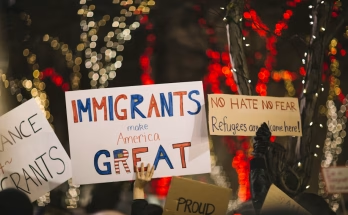
Graphic by Tula Winton
When I think of the term “cancel culture,” I think of the recently-developed norm built on calling people out for unacceptable actions. According to Dictionary.com, it only became popular around 2018. Some people give cancel culture a bad rap, associating it with extreme progressivism or “wokeness.” But to me, it isn’t that deep.
It’s just about not letting people get away with bad treatment of other people. No matter your social status, cancel culture treats everyone as an equal.
As social media became a constant in our lives, so has its influence on most people. That influence includes marginalizing groups based on gender, race or anything that sets them apart from the white, straight males that have always held the most power in the US.
But times have changed. In a more politically correct 21st century, we shouldn’t allow this to happen. With cancel culture’s help, these people who are used to getting away with everything are finally being held accountable for their actions.
Some of these influencers with millions of followers have accumulated a large fan base that defend them no matter what. Personally, I’ve seen an old tweet or video resurface of said influencers expressing something offensive and even full of slurs. I’ve been frustrated many times by how quickly it’s dismissed because the influencer “didn’t know any better” or “has grown.”
In what world is it fair that, just because somebody has lots of followers, they can get away with something a normal person could never?
This is where cancel culture comes in. It’s a powerful tool for justice when others refuse to step up.
Cancel culture isn’t about preventing people from learning from their mistakes. It’s about making sure it never happens again.
Yes, it may be seen as a harsh punishment, but sometimes social ostracization is the only way to guarantee change. A well known example is Andrew Tate, the self-proclaimed misogynist who’s controversial videos led to his inevitable downfall.
A common argument I see against cancel culture is that it’s a form of censorship and violates the first amendment. But while the first amendment protects free speech, it specifically includes the key exception of obscenity, defamation, blackmail, and perjury. In other words, if hate speech gets cancelled, it’s not a free speech issue.
Cancel culture isn’t something I agree with because I’m sensitive or get my feelings hurt easily. I just have basic empathy for people. Sure, it can go overboard, sometimes it can stray further from fixing the problem and do more harm than good.
Like anything, cancel culture has its downsides, but ultimately the positives outweigh them. When used responsibility, cancel culture is an important tool to create an environment built on transparency, where social justice comes first.